What is Strange Heavens?
Strange Heavens is a song cycle by Jon Wilks and Rich Lines, written in response to Sir Stanley Spencer’s paintings at National Trust Sandham Memorial Chapel in Burghclere, North Hampshire. It was made with fiddle player and composer Nina Smith, keyboard player and sound designer Jon Nice, and engineer Albert Hansell. Original songs, spoken text, traditional folk material, found sound and the songs of the music hall and the First World War run together as one continuous piece. The album is out in Spring 2027, a hundred years after the chapel was dedicated.
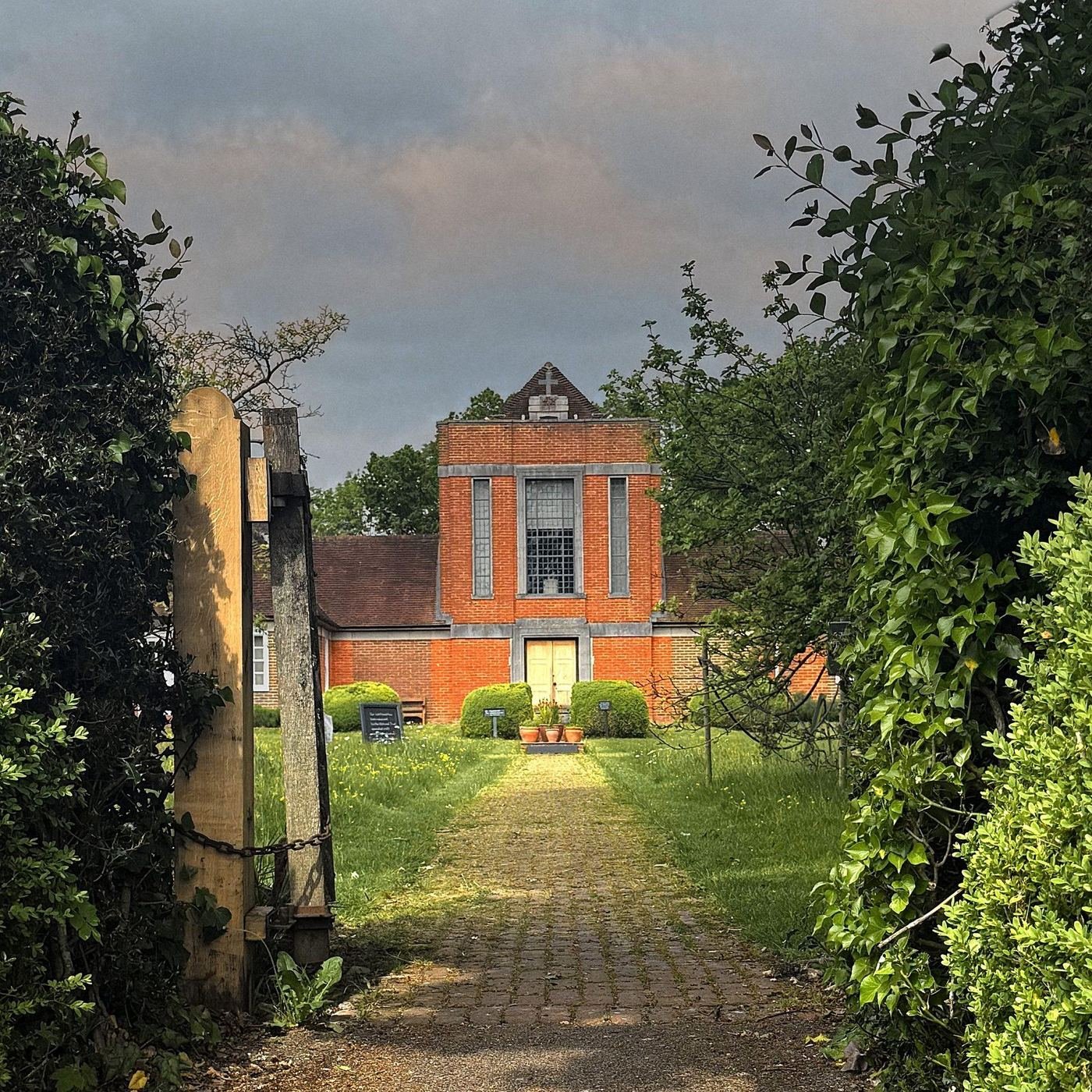
A holy box in Burghclere
Sandham Memorial Chapel was built in the 1920s by Mary and Louis Behrend in memory of Mary’s brother, Henry Willoughby Sandham, who died after the First World War from an illness contracted in Macedonia. They commissioned Stanley Spencer to paint its walls. On hearing he had the job, Spencer is said to have exclaimed, “What ho, Giotto!”
He worked on it from 1926 to 1932. The paintings draw on his own war: first as a medical orderly at the Beaufort War Hospital in Bristol, then as a soldier on the Salonika front. There are no battle scenes. Instead there are men scrubbing floors, filling tea urns, sorting laundry and reading maps.
The chapel’s sense of the spiritual is not a straightforward one. Spencer found the extraordinary in the ordinary: a kind of grace in the everyday rituals of hospital and camp life, in work that would usually go unrecorded.
Jon Wilks explains
A few miles from my home in Whitchurch, in the North Hampshire village of Burghclere, there is a small chapel that contains one of the greatest achievements in twentieth-century British art. Astoundingly, most people have never heard of it.
We know the war poets so well. Wilfred Owen, Siegfried Sassoon: they’re taught in schools, they’re part of the national conversation about the First World War. And yet here is this extraordinary visual work by Stanley Spencer, and it seems to be spoken about only by people already in the know. How can that be? Why aren’t we all taught about it when we learn about the First World War?
Every wall is filled with scenes of hospital life, military labour and quiet human dignity, rendered with an almost hallucinatory intensity. But what moves me most is its spirit. Its dedication to community, camaraderie, and to something spiritual – in whatever form Stanley intended that to be – is such an antidote to the hell of war.
You can go in there again and again and discover a hundred new points of interest every time. Because the chapel has no electric light, the experience is entirely organic, shaped by the landscape and the elements in the moment you’re there. I’ve been inside on a spring day and seen explosions of blossom, revealed to me quite suddenly by an urgent, pointing finger of sunlight. I’ve also been there when the rain moves in and the winter light vanishes, and suddenly you’re surrounded by encroaching, virulent darkness: hundreds of faces and eyes hovering around you, the awkward, insistent presence of Stanley there on your shoulder. I’ve been drawn in by the beauty. I’ve also been forced to leave by the sheer heft of it all. It is an immensely powerful piece of work.
From Ghosts to Strange Heavens
Jon Wilks explains
This project started life as something else entirely. A few years ago I began thinking about an album I was calling Ghosts. The idea was to create a continuous, seamless collection of traditional songs that faded in and out of a kind of aural ether, as though you were wandering through someone’s dream – material emerging and dissolving, like half-remembered things.
I’d first been to Sandham when my daughter was a toddler. She did toddler things, and I didn’t really take the place in. Then in 2023, on a day off from my tour with Martin Carthy, we went along, and I was bowled over (as was Martin). I kept going back. After about the third visit I plucked up the courage to knock on the office door and ask whether they might let me in on a closed day with my guitar. Thankfully, they said yes. I wanted to sit in that chapel with a guitar in my hands and see whether there could be a connection between the visual and the musical forms. I had no idea what might happen, but as soon as I plugged my guitar in, the chords for ‘Strange Heavens’ just fell out.
At first the plan was a single Spencer-inspired song for Jon’s 2025 album, Needless Alley. In the cold early spring of 2025 he brought Rich Lines to the chapel. They spent the morning mostly in silence, and by lunchtime, over a pint at the Carpenters Arms across the road, they had agreed that one song couldn’t do the place justice.
The idea became a short song cycle, partly prompted by Paul Simon’s Seven Psalms, which Jon had been listening to. It has since grown into a full album, joined throughout by a soundscape the band have come to call “the ether”.
Jon Wilks
Jon Wilks is a singer, songwriter and fingerpicking guitarist who lives a few miles from the chapel, in Whitchurch. He has released five solo albums, toured with Martin Carthy in 2023, and founded the folk music site Tradfolk.
Jon Wilks explains
Whatever reputation I have has been built on the back of traditional English music, and yet I’ve never been entirely comfortable being called a folkie, or a folk singer. I think of what I do as making music that reflects where I’m from. There are images that live in my head – shadow and light across a Warwickshire field at the long end of summer, the dark green of the Whitchurch Hangings, the canal bridges at Gas Street Basin, the factory streets around Digbeth – and I want to find ways to put them into song. Who knows why. Traditional folk songs are one of the palettes I draw from, but so are other English strands – Nick Drake, Syd Barrett, the Beatles, Robert Wyatt.
My attraction to Stanley Spencer comes from the same place. I can see what he’s trying to do. It’s his world, and it’s a world I recognise.
Rich Lines
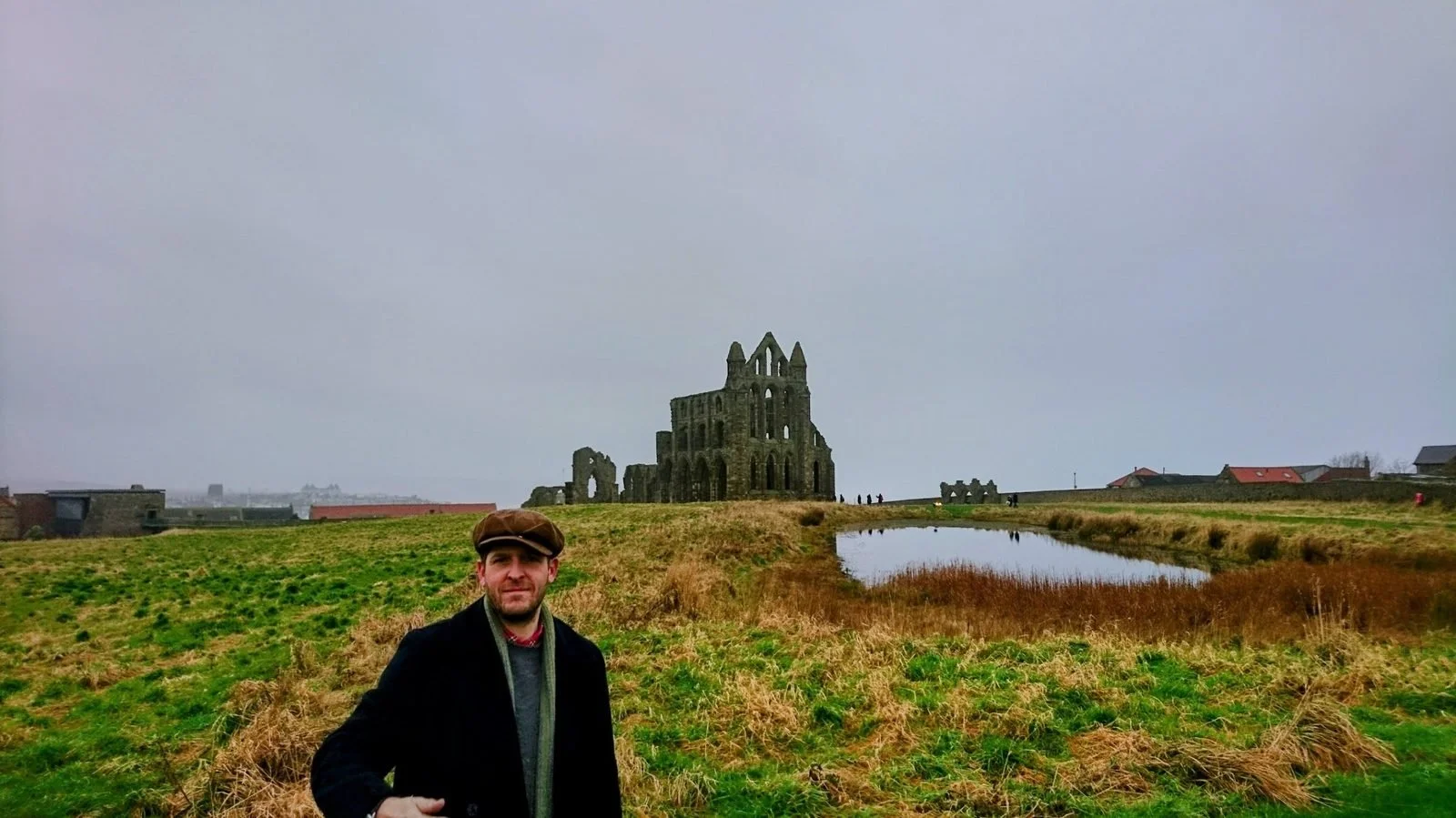
Jon Wilks explains
I should say something about my collaborator, because there would be no project without him.
Rich and I met at Solihull Sixth Form College in the 1990s. We played in bands together, busked together in Birmingham, and shared that open-eared and wide-eyed passion that culture-guzzling teenagers can have for music and the written word. We wrote together, too, and have continued to do so sporadically ever since, occasionally as part of the Grizzly Folk collective. He was as in love with words as I was with guitars, and that hasn’t changed. In his working life he’s a writer and editor – for Future Publishing among others, for Time Out in a former life, and for Tradfolk back when I was running it – but it’s his quieter creative work that has always struck me most.
“He was as in love with words as I was with guitars, and that hasn’t changed.”
Jon WilksWhen I began to understand what Strange Heavens might become, I realised fairly quickly that I didn’t want to write the words myself. I wanted Rich to write them. He has a way of finding his way into a subject that eludes me entirely – a particular angle of approach; a patience with ambiguity. Stanley is a man well worth finding out more about: odd, visionary, contradictory, deeply strange. Rich took to him immediately.
We’ve spent a good deal of this project sending each other little Stanley discoveries. “Have you SEEN this?” It has been a joy to explore the treasures of what Stanley called his “holy box” with my dear old friend.
The people who made it
Jon Wilks
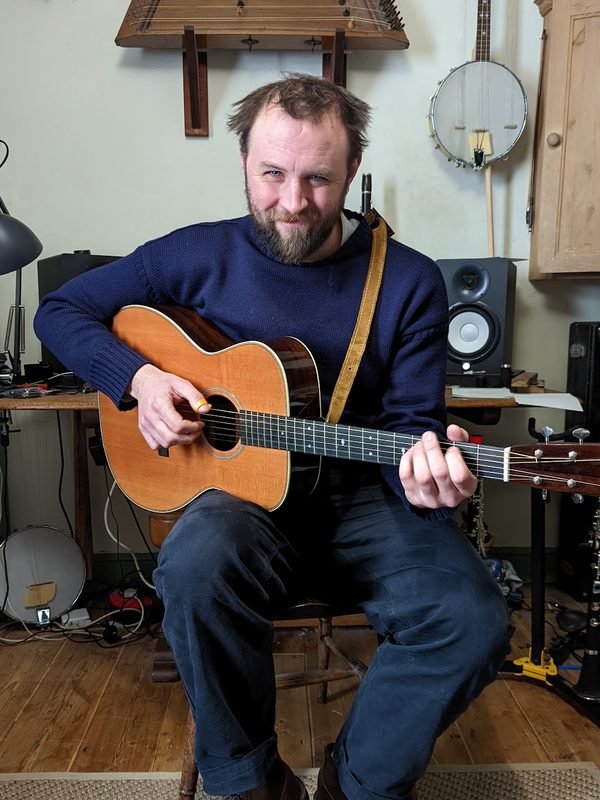
Music, guitar, voiceA fingerpicking guitarist and songwriter who has built his reputation on traditional English song. He has released five solo albums. Before I Knew What Had Begun I Had Already Lost was a Guardian Folk Album of the Month, and Needless Alley (2025) received four-star reviews from MOJO, RNR and Songlines. He wrote most of the music for Strange Heavens and arranged its traditional pieces.
Rich Lines
Words, voiceA writer and editor, and Jon’s collaborator since their teens. The two last recorded together on the Grizzly Folk album Lairy Through the Town (2015). Every lyric on Strange Heavens is his.
Nina Smith
Fiddle, voice, compositionsA singer and fiddle player who lives near the chapel. She studied under Sam Sweeney in the National Youth Folk Ensemble, played in the Hampshire Youth Folk Ensemble, and was part of the early development of Whitchurch Folk Festival as a friend of the late Paul Sartin. She brought much of the traditional song and tune material into the piece, wrote ‘Ladle Hill’, wrote the music for ‘Ever at Work, Ever at Rest’ and co-wrote ‘A Place of In-betweens’. She also sings in the choir.
Jon Nice
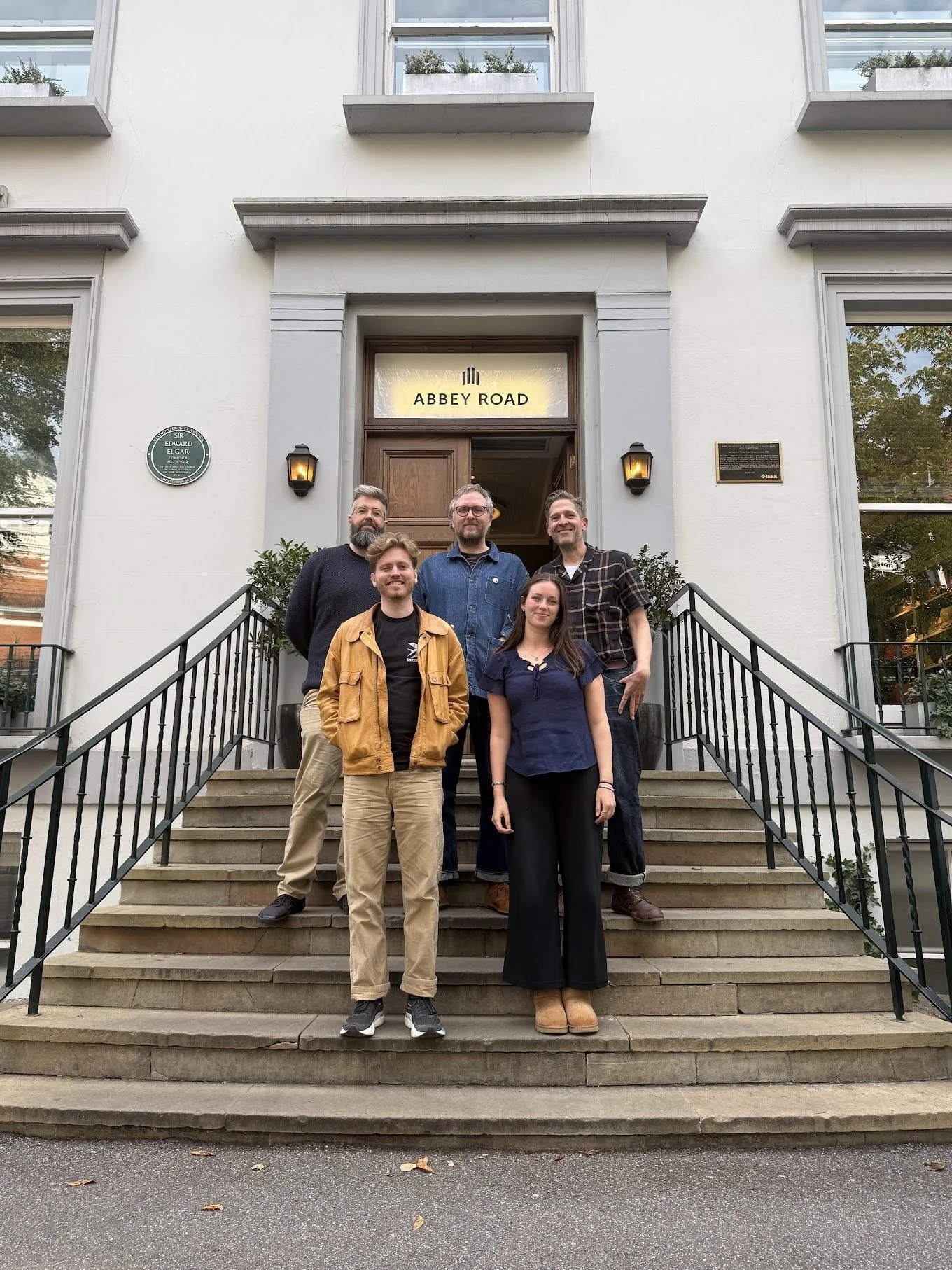
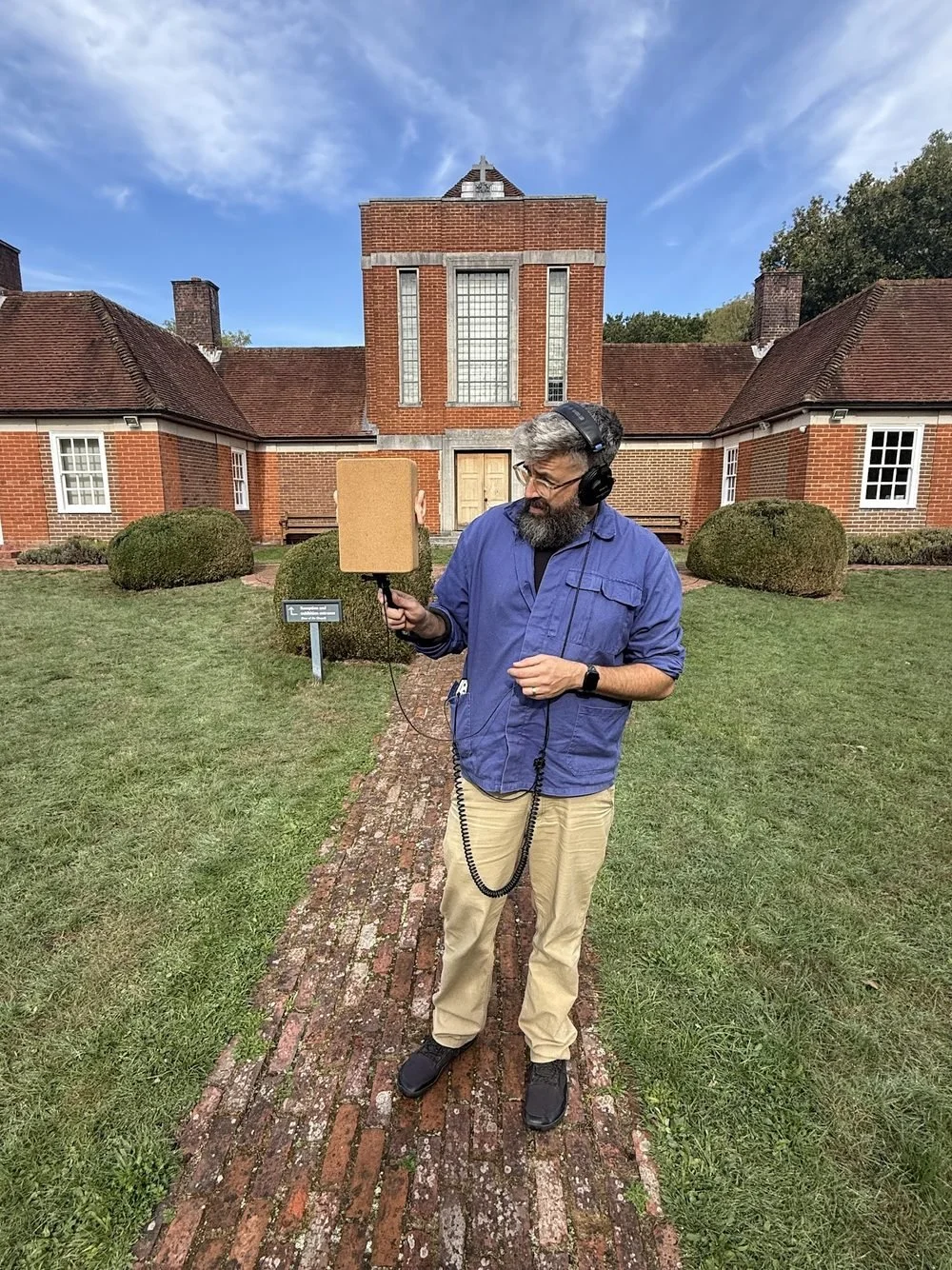
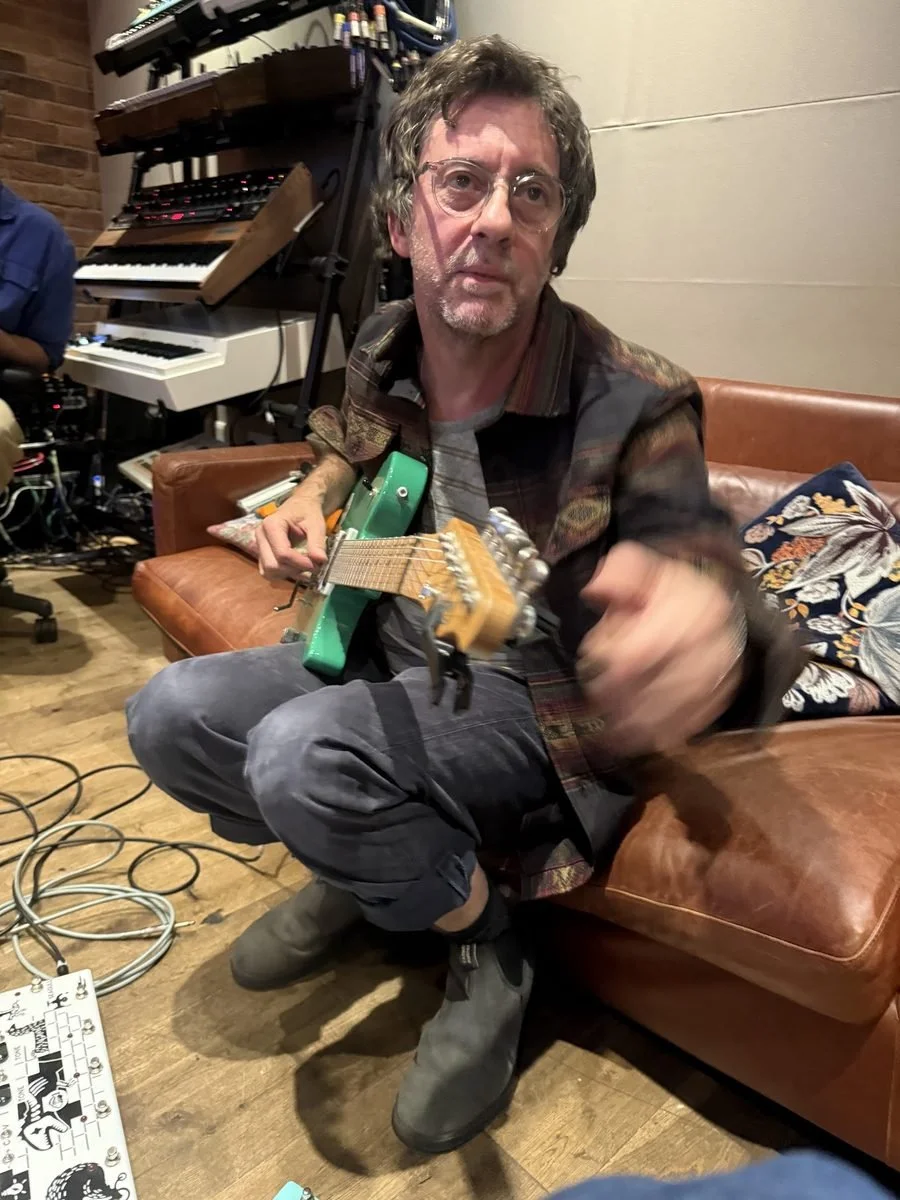
Keys, soundscapesA founding member of the Grizzly Folk collective, which began in Japan in 2007, and part of almost everything Jon Wilks has made since. He plays most of the keyboards and builds the soundscape the songs sit within. For it, he made a binaural microphone, christened “Stanlears”, to record the chapel and its grounds, and he took acoustic measurements of the chapel so that its reverb can be recreated on the record and on stage. He also conducted the backing vocals at Abbey Road. In Jon Wilks’s words, “a true soundsmith, if such a word exists and if ever there was one.”
Albert Hansell
EngineeringAlbert engineered every session, in every place the album was recorded, and made all its engineering decisions. A graduate of the Tonmeister course at the University of Surrey, he specialises in traditional and acoustic music. His credits include Needless Alley, the Brown Boots Boogie Band and Alvar Smith, and live work for Broadside Hacks, and he runs sound for Whitchurch Folk Club and Whitchurch Folk Festival. He also plays melodeon on ‘Ladle Hill’, and won the Double Jig at the John Gasson Jig Competition, Sidmouth, 2025.
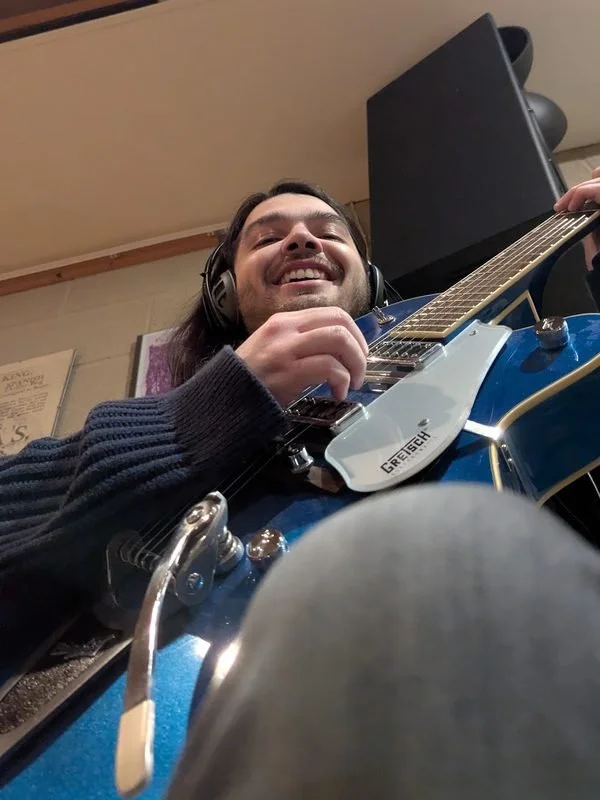
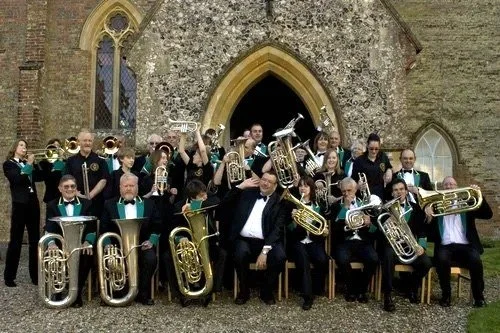
Graham Coxon plays guitar on ‘Strange Hells’. Nick Hart recorded kaval, duduk and viol da gamba in the chapel, and gave a good deal of friendly advice along the way. Loz Hunt plays percussion. Lewis Chinn of Southbound played all the brass at Abbey Road, having brought his sousaphone, trombone and trumpets up from South London on the Tube. East Woodhay Silver Band recorded in their band hut in East Woodhay, playing brass parts written by Jon Wilks and transposed by Joe Sartin. The choir is Nina Smith, Ottalie Lindqvist-Lines and Kai Wilks.
Music with a postcode
Jon Wilks explains
I’ve long thought of traditional folk music as music with a postcode: songs that belong to one place, and carry it with them. I don’t think of Strange Heavens as folk, but it’s the same idea – music that belongs to Burghclere and to Stanley’s chapel. It’s the psychogeography of it that I love. It sends shivers down my spine.
I’ve been asked what Strange Heavens sounds like, and it’s not an easy question to answer. Perhaps it’s easier to describe the things I was listening to when the idea came to me.
Paul Simon’s Seven Psalms made a deep impression on me: that sense of a single continuous piece holding many different emotional registers, moving between the intimate and the vast, folding back on itself as only a song cycle can. The Shovel Dance Collective’s The Water is the Shovel of the Shore pointed at something else: the way traditional material reflects memory, collective or otherwise, and that psychogeography is as relevant to music as it is to any other art form, if not more so. I want Strange Heavens to belong as much to Burghclere as Stanley’s paintings belong to Cookham.
Further back, I studied Pierre Schaeffer at university and have never entirely shaken off an interest in musique concrète, in found sound and the texture of the world as musical material. And perhaps the piece that has stayed with me longest is Gavin Bryars’ Jesus’ Blood Never Failed Me Yet – the way it moves in and out of solidity and structure, the way a fragment of something half-heard appears to carry the entire weight of a life. It always seemed to me to be about the echo of memory: the way certain things persist, surface, dissolve, and return. When I stood inside Sandham Memorial Chapel and looked at those murals, I felt something similar. Spencer had done it in paint.
I’ve always been influenced by the Englishness of Nick Drake, especially Bryter Layter, where you can hear the long shadows at the end of summer falling across the Warwickshire fields. The Beatles’ White Album was on the list too – you can’t make an album inspired by the wonderful parts of England without having the Beatles in there.
There’s no question that there are hints of the Kinks and Blur in this album, which is why having Graham Coxon involved has been a nice circle completing. He’s a big fan of Stanley too. He doesn’t play on ‘What-Ho Giotto’, but I remember describing the song to him as something that sat alongside ‘The Debt Collector’ from Parklife, on which he played sax. I think it’s more Kinksy than that, though. For some reason, ‘Shangri-La’ comes to mind.
The horns aren’t just colour. Spencer’s chapel is a war memorial, and brass was the sound of that war – military bands, hymn tunes played by regimental musicians, the kind of thing that would have drifted across a camp in Macedonia or rung out at a homecoming. It felt wrong to leave that texture out.
Three responses to one room
Jon Wilks explains
Strange Heavens
‘Strange Heavens’ is Rich’s response to the first time he walked through that heavy door at Sandham and took in what’s inside. I remember him being struck almost mute by the place when we first walked in together. He went more or less silent for half a day, and it took a lunchtime pint in the Carpenters Arms before the words started coming back. The song carries something of that – hymnal, slow, and quietly moving.
What-Ho Giotto
‘What-Ho Giotto’, by contrast, is a song of lists. It’s frenetic, essentially a music hall romp. Where ‘Strange Heavens’ is the silence, ‘What-Ho Giotto’ is what happens once the words come flooding back and there’s simply too much to take in – Rich mentally cataloguing what’s in front of him, physically and spiritually, and questioning at every turn whether he’s looking at Stanley, or at something larger moving through Stanley’s reverence for the everyday.
Strange Hells
‘Strange Hells’ is Rich’s attempt to come to terms with the fact that what’s on the walls of Sandham doesn’t line up with our usual reading of the First World War. There’s no sign here of Sassoon or Owen, none of the imagery we’ve all absorbed as the standard-issue horror of the trenches. Musically, it’s the closest we get to something like psych-folk, maybe even White Album-era Beatles.
- A Place of In-betweensWords Rich Lines · music Jon Wilks and Nina Smith
- Strange HeavensWords Rich Lines · music Jon Wilks
- What-Ho GiottoWords Rich Lines · music Jon Wilks
- Ladle HillMusic Nina Smith
- Strange HellsWords Rich Lines · music Jon Wilks
- Ever at Work, Ever at RestWords Rich Lines · music Nina Smith
- Staines MorrisTraditional, arranged Jon Wilks
- Cookham Fair / Green BushesWords Rich Lines · music Jon Wilks / traditional, arranged Jon Wilks
- Beyond the World of NamesWords Rich Lines · music traditional, arranged Jon Wilks
- A Work of This KindWords Rich Lines · music Jon Wilks
What Stanley would have heard
Jon Wilks explains
Spencer was raised the child of a musician – his father was a music teacher, and Bach was a particular passion – and he loved music all his life. He also had a profound attachment to place, to Cookham in particular. His letters mention hearing other soldiers singing traditional songs in the hospital and at the front. What we now call traditional folk music was most likely a far more present and natural part of his world than it is of ours.
Nina’s got a far better feel for this material than I do. ‘Green Bushes’ was collected in Cookham Dean while Stanley was still a child. We can’t claim he definitely knew it, but it’s unmistakably of his time and place. ‘Her Bright Smile Haunts Me Still’ became the signature tune of the Royal Army Medical Corps only two years before Stanley arrived at Beaufort, which makes it close to a certainty that he’d have known it well.
None of this is decoration. The idea is to put our own response to Stanley’s art alongside the music we believe would genuinely have been part of his world.
Where we recorded
The album was recorded in three places: National Trust Sandham Memorial Chapel, Wildgoose Studios in Wherwell, Hampshire, and Abbey Road in London. Albert Hansell engineered throughout.
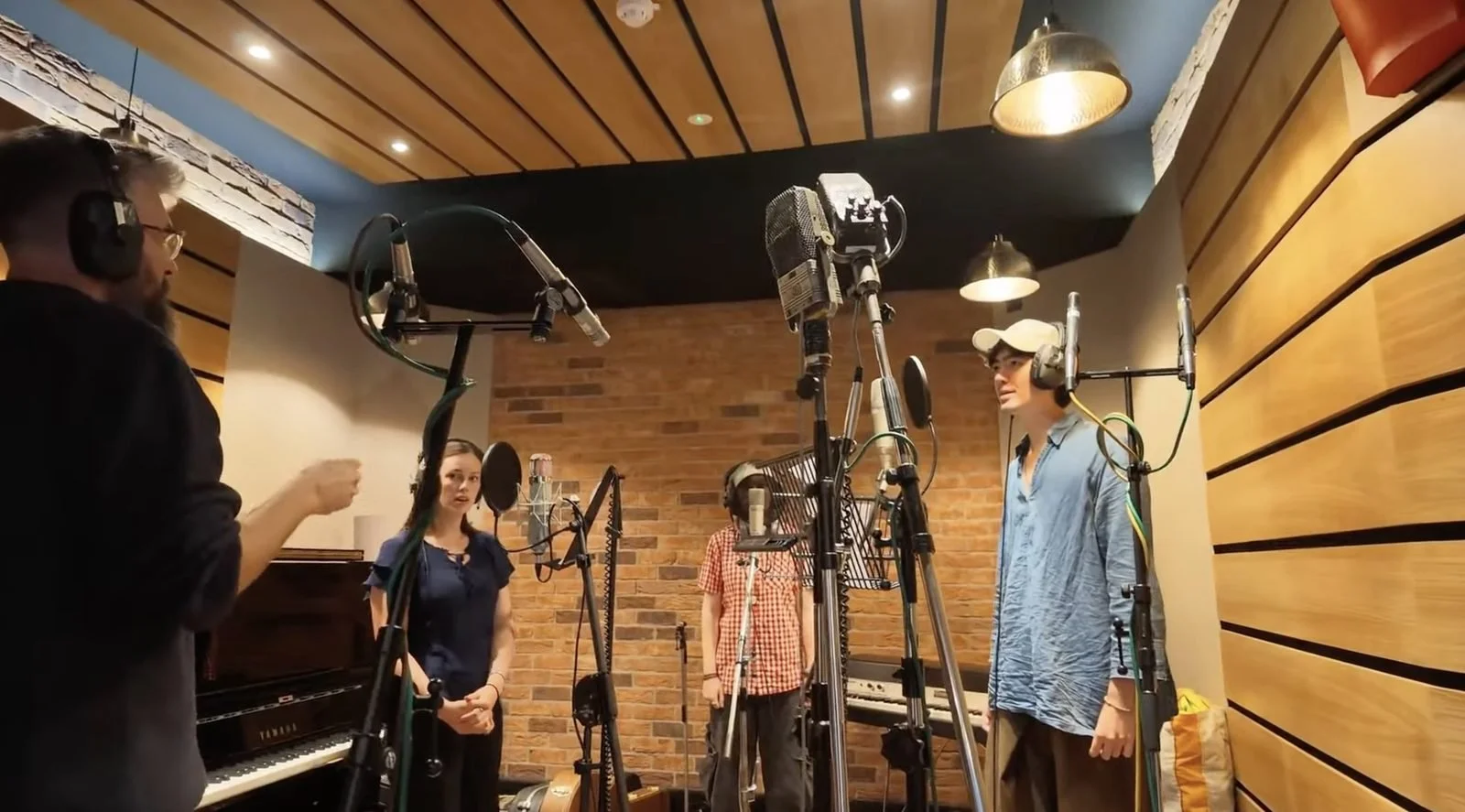
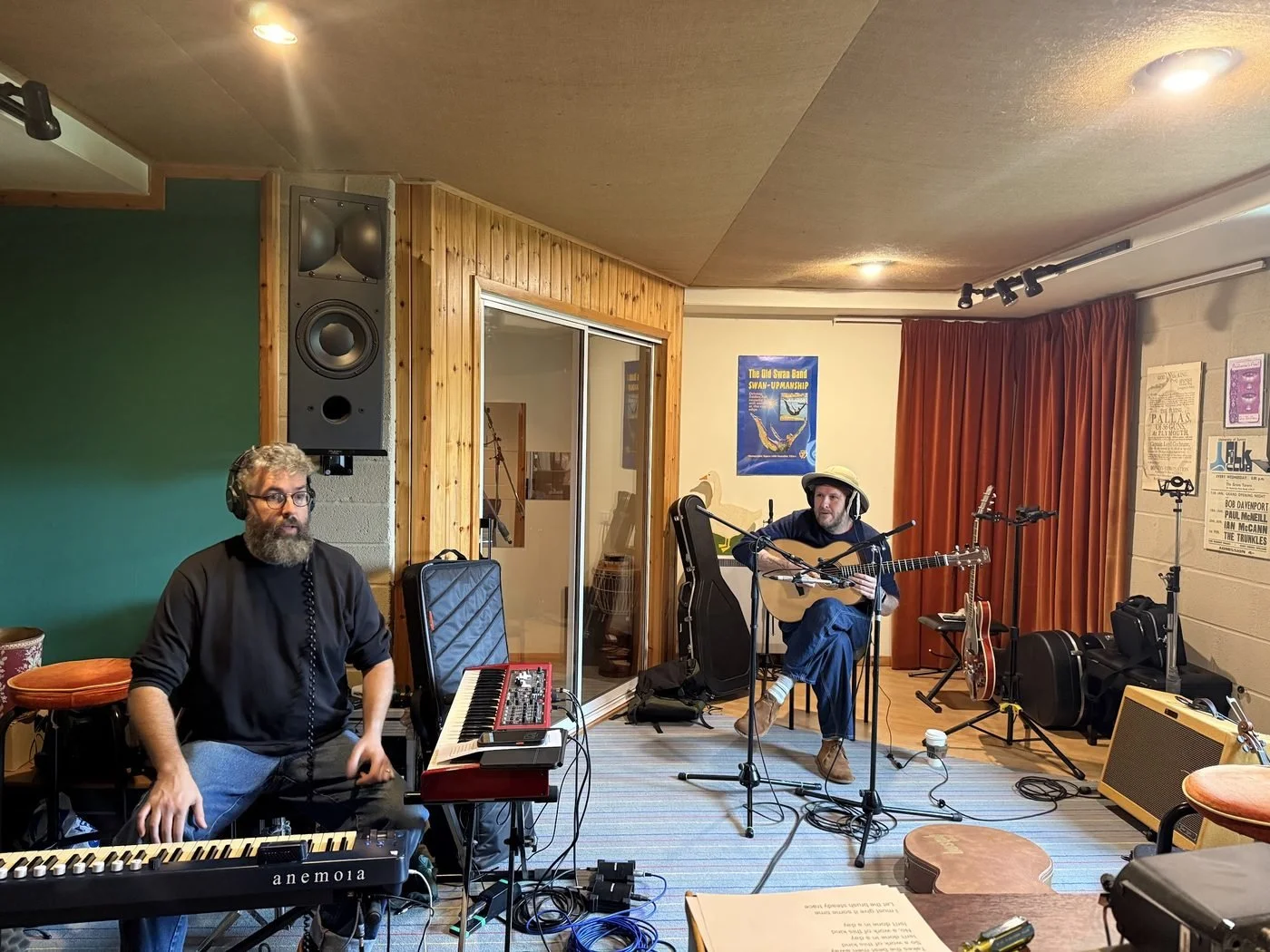
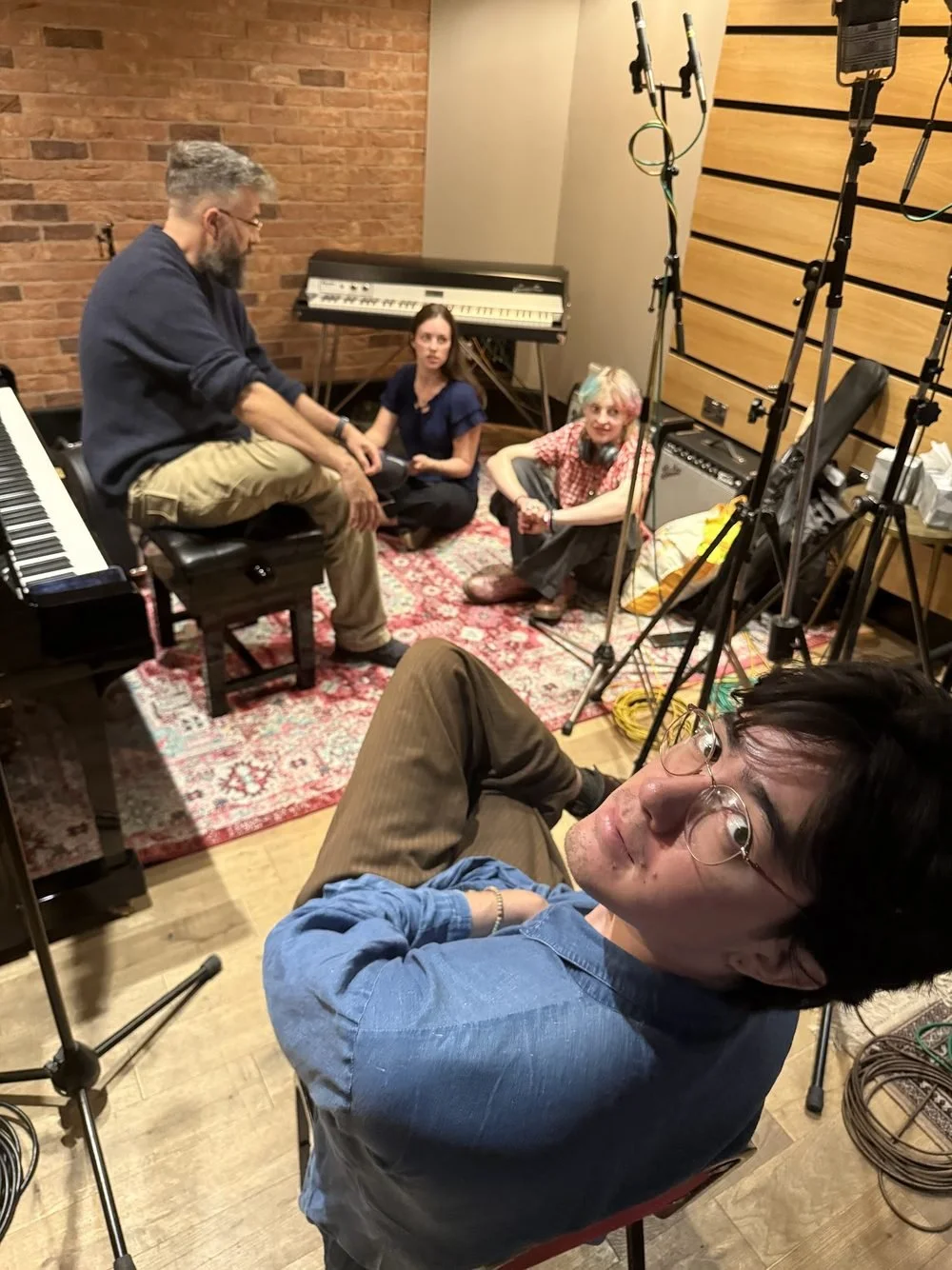
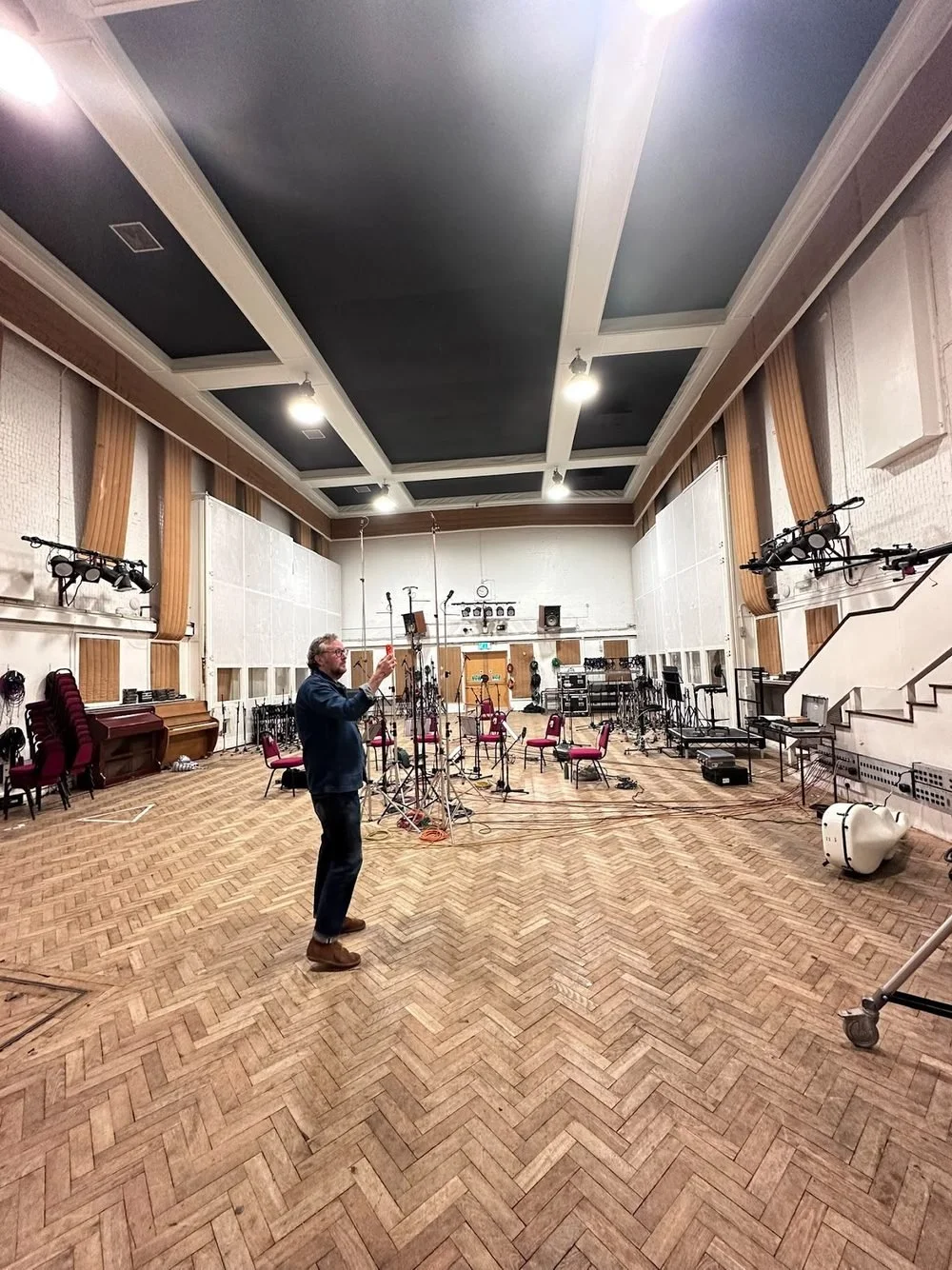
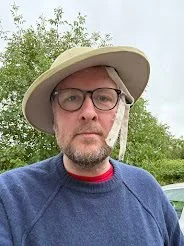
There was a pith helmet in the stairwell at Wildgoose, for no obvious reason. Jon Wilks found it just as recording was about to start, and it suited what they were doing. It didn’t sit well over studio headphones.
An evening in two halves
The traditional, music hall and First World War songs Stanley might have known.
Strange Heavens, played straight through.
- Wed 10 MarchManchester Folk FestivalTickets
- Sat 13 MarchSkipton Town HallTickets
- Thu 18 MarchCecil Sharp House – album launchTickets
- Fri 19 MarchPinder Hall, CookhamTickets
- Sat 20 MarchMidlands Arts Centre, BirminghamTickets
- Wed 24 MarchThe Courtyard, HerefordTickets
- Fri 4 & Sat 5 JuneNational Trust Sandham Memorial ChapelTickets on sale soon
‘Strange Heavens’, the album, will be out in Spring 2027.
Supported by Basingstoke and Deane Borough Council.
Photos: Jon Wilks, Jon Nice and Kai Wilks.